
India is often introduced to visiting executives through its great metropolitan shorthand: Bengaluru for technology, Mumbai for finance, Delhi for policy, Hyderabad for pharma and digital capability, Chennai for manufacturing and services. These cities matter. They are powerful entry points into the Indian story.
But they are not the whole story.
To understand India as a management classroom, universities and executive immersion programmes must look beyond the obvious metros. The next layer of learning often sits in tier-2 and tier-3 cities: Coimbatore, Indore, Kochi, Jaipur, Surat, Bhubaneswar, Nagpur, Lucknow, Mysuru, Chandigarh, Visakhapatnam and many others. These are not merely smaller versions of metropolitan India. They are distinct operating environments. They reveal how demand is forming, how aspiration is changing, how distribution is being redesigned, and how companies learn to serve markets that are neither fully urban nor traditionally rural.
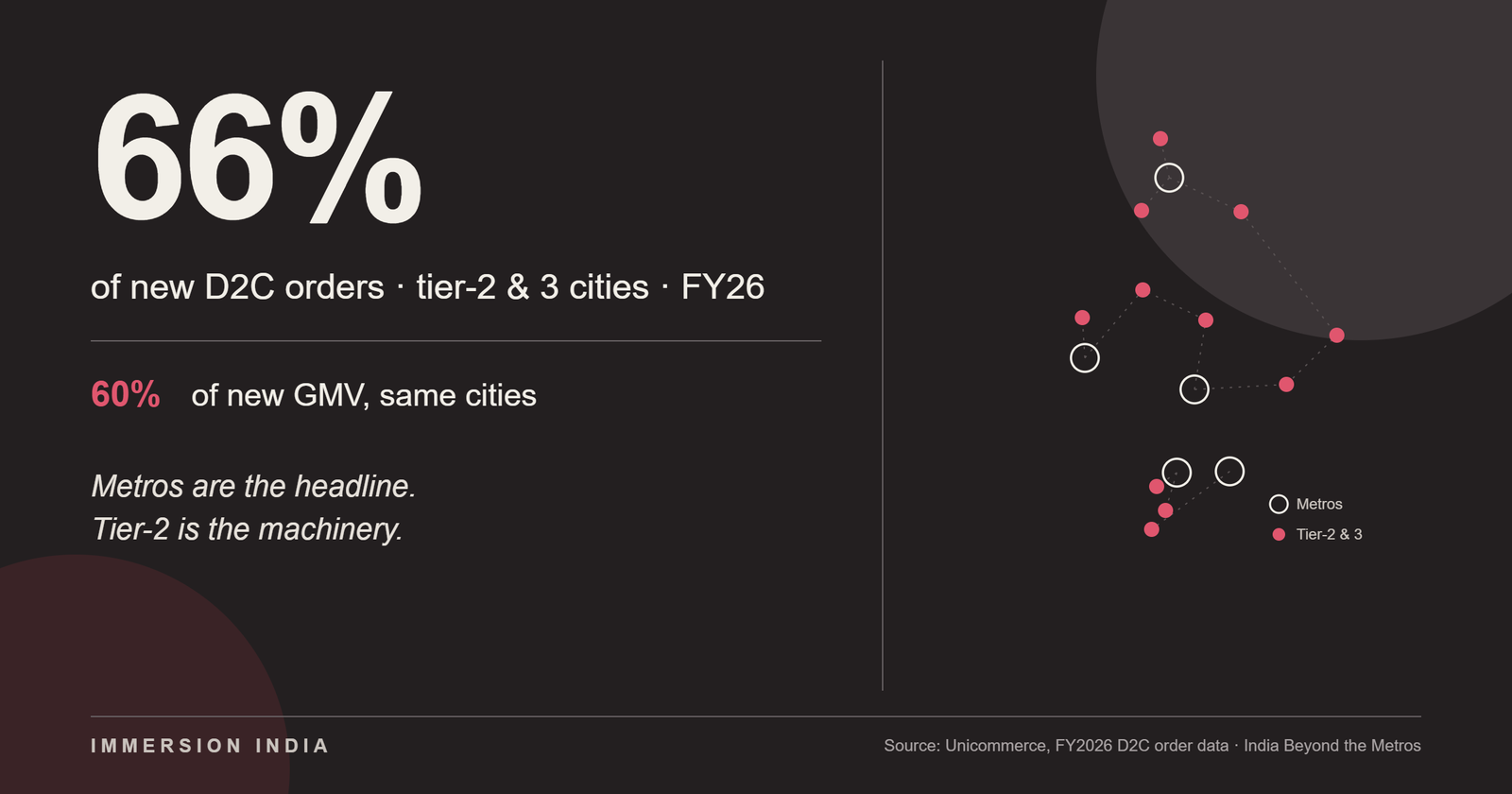
This is where India becomes most instructive.
The first lesson is that India is not one economy. It is several economies moving at different speeds. The premium consumer in Gurugram and the emerging entrepreneur in Indore may both be digitally connected, but their expectations, price sensitivity, service needs and trust cues may differ sharply. The salaried technology worker in Bengaluru may adopt a product online. A family business in Coimbatore may expect a relationship-led sales process. A first-generation consumer in a smaller town may want digital convenience, but also reassurance through a branch, dealer, agent or local influencer.
This is not backwardness. It is market structure.
For executives, tiered demand is one of India’s great lessons. Companies cannot assume that a product designed for the top of the market will simply cascade downward with minor adjustments. Nor can they assume that lower price alone creates access. In many Indian markets, the challenge is not just affordability. It is relevance, trust, serviceability and perceived value.
A product may need different packaging. A financial service may need simpler onboarding. A healthcare model may need local referral networks. An education offering may need parent confidence as much as student interest. A consumer durable may need financing, installation support and after-sales responsiveness. A digital platform may need assisted usage before self-service becomes natural.
The Indian middle is not a passive recipient of metropolitan innovation. It is an active test of whether innovation can travel.
This is why distribution becomes central. In developed markets, distribution is often treated as an efficiency problem. In India, it is also a trust problem. The route to market is not merely about moving goods or acquiring users. It is about building confidence across uneven infrastructure, variable purchasing power and diverse local behaviours.
The companies that succeed outside the metros understand that distribution is strategy. They build hybrid models. They combine digital reach with physical presence. They use local partners without surrendering quality. They create service networks that can handle complexity at the edge. They understand that a complaint unresolved in a smaller city may travel through social networks faster than any formal escalation system.
This makes tier-2 India a powerful classroom for service design. In the metros, poor service may be tolerated if the product is strong enough or alternatives are limited. In smaller markets, reputation can be more intimate and more fragile. Trust is social. A bank branch manager, a dealer, a doctor, a school principal, a local entrepreneur or a logistics partner may influence adoption more than national advertising.
Service design in such markets must therefore account for human mediation. It must ask: who explains the product? Who resolves failure? Who reassures the first-time buyer? Who absorbs the friction when the system does not work as promised? Who turns a transaction into a relationship?
These questions matter far beyond India. As global companies look for growth in emerging markets, they will confront similar patterns: uneven adoption, fragmented infrastructure, aspirational consumers, informal trust networks and the need for locally adapted execution. India simply compresses these lessons into one vast, demanding market.
Pricing is another critical lesson. Tier-2 dynamism does not mean low willingness to pay. That is a common and costly misconception. Consumers and enterprises outside the metros may be value-conscious, but they are not necessarily cheap. They may pay for durability, status, reliability, convenience or trust. They may reject stripped-down offerings if those offerings signal inferiority. They may prefer premium products in certain categories and extreme frugality in others.
This is where simplistic income segmentation fails. The Indian consumer often behaves in category-specific ways. A family may economise on everyday purchases while investing heavily in education, weddings, smartphones, healthcare or home improvement. A small business may resist subscription fees but spend willingly on tools that visibly improve revenue or efficiency. A regional enterprise may negotiate hard on price but expect the same seriousness of service as a metropolitan client.
For executives, the lesson is clear: pricing must be designed around perceived value, not merely purchasing power. The right question is not, “How do we make this cheaper?” It is, “What value does this customer recognise, trust and pay for?”
Universities designing India immersion programmes should take this seriously. Too many programmes remain confined to predictable stops: a technology park, a start-up hub, a large corporate office, a policy discussion and perhaps a social enterprise visit. These are useful, but incomplete. They show India’s visible modernity. They do not fully show its operating complexity.
A richer immersion would include a regional manufacturing cluster, a fast-growing tier-2 consumer market, a local distribution network, a digital payments use case outside the elite urban context, a healthcare or education delivery model, and a meeting with entrepreneurs who build for customers that metropolitan India often misunderstands.
The aim is not tourism through the “real India”. That phrase is both patronising and imprecise. The aim is management learning. Tier-2 India teaches how strategy changes when the customer is aspirational but cautious, digitally aware but relationship-driven, price-sensitive but quality-conscious, local in behaviour but global in exposure.
It also challenges lazy binaries. India is not urban versus rural, modern versus traditional, digital versus physical, premium versus mass. It is increasingly both-and. A small-town consumer may discover a brand on Instagram, discuss it with family, compare prices online, buy from a local dealer, finance the purchase digitally and expect human service if anything goes wrong. That journey is not linear. It is layered.
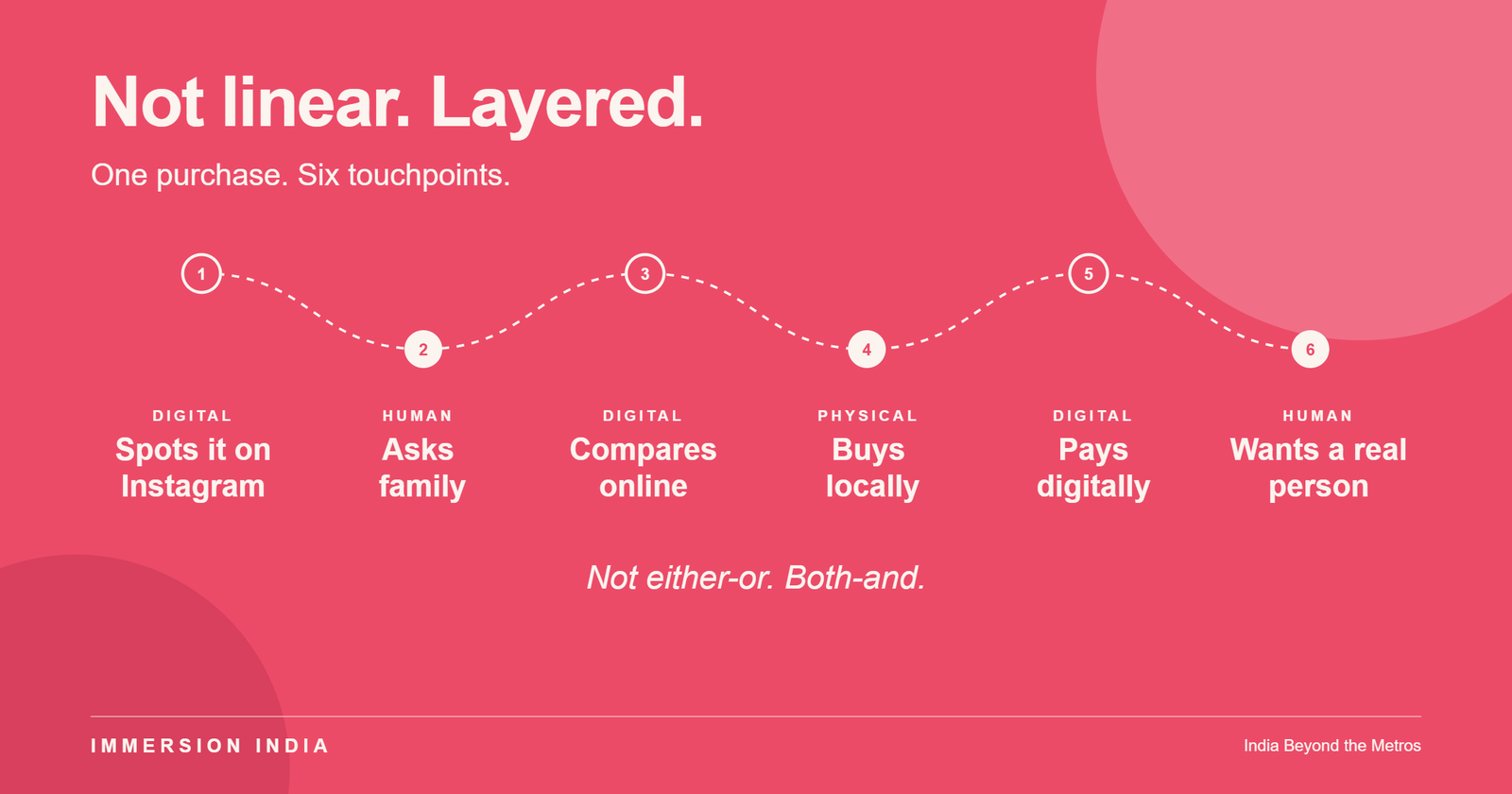
This is precisely why India is valuable for executive education. It forces leaders to abandon clean models and confront messy adoption. It shows that scale is not achieved by standardisation alone. Scale often requires modularity: a core proposition that remains consistent, surrounded by local adaptations in channel, pricing, communication and service.
The best companies in India do not merely expand from the metro outward. They learn from the outside inward. They allow regional markets to shape product design. They detect emerging demand before it appears in national averages. They recognise that the future of consumption, talent and entrepreneurship is not confined to a few large cities.
There is a talent lesson here too. Tier-2 India is not just a market. It is a capability base. Many of India’s professionals, founders, engineers, designers, service workers and small business owners come from outside the metros. Their ambitions are not smaller. Their pathways are different. Companies that understand this can build distributed organisations, lower operating costs, improve retention and tap into talent pools that metropolitan hiring strategies often overlook.
For visiting executives, the deeper insight is that India’s growth is becoming more geographically distributed. The old map of opportunity is too narrow. The next India will be built not only in glass towers and global capability centres, but also in industrial clusters, logistics corridors, regional universities, family businesses, digital marketplaces, local hospitals, coaching centres, fintech networks and manufacturing ecosystems across the country.
To study only metropolitan India is to study the headline. To study tier-2 India is to study the machinery.
That machinery is complicated, improvised and often uneven. But it is also inventive. It teaches leaders how demand is created when trust is scarce, how pricing works when value is contextual, how service must be designed when failure is visible, and how distribution becomes a source of competitive advantage.
For universities, this is the opportunity. India immersion should not be a tour of success stories. It should be an encounter with operating reality. The cities beyond the metros offer exactly that. They show how growth actually travels, through aspiration, adaptation, networks, negotiation and trust.
That is where the next management lesson lies.
Not in India as a market of one billion consumers, which is the familiar cliché. But in India as a thousand markets learning to connect with each other.


